Overview: Amazon, New York Times, 10 robots, Blue Jay, and Project Eluna
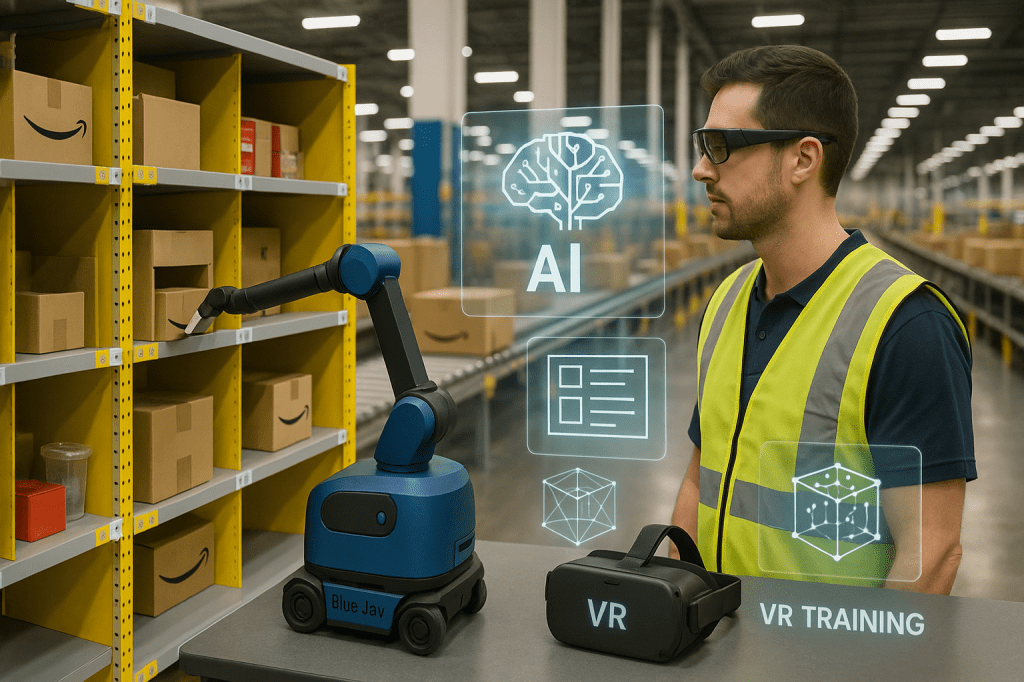
Amazon publicly showcased a set of robotics and AI tools after a New York Times report raised concerns about automation and jobs. The company said it is already using or testing ten robots and AI systems. Public highlights include Blue Jay, a multi-tasking picking and stowing robot, and Project Eluna, an agentic AI assistant that helps workers and optimizes sorting. CEO Andy Jassy has previously said efficiency gains from automation may lead to near-term workforce reductions, and Amazon also showed augmented reality smart glasses and virtual reality training for drivers.
These developments matter to everyday shoppers and workers because they affect how fast packages arrive, how warehouses operate, and how many people work in fulfillment centers. This article explains what Amazon revealed, what each system does, and practical implications for workers, consumers, and policy.
What Amazon showed: robots, agentic AI, AR and VR
Amazon described ten robotics and AI projects in public materials, with several items emphasized. Below are the main technologies the company highlighted.
Blue Jay, a multi-tasking picker and stower
Blue Jay is designed to pick items from bins, stow them back, and consolidate packages for shipment. Amazon says it can handle about 75 percent of the types of items the company stores. The company positions Blue Jay as a tool to speed up Same-Day delivery by reducing handling time for simpler items.
Project Eluna, an agentic AI teammate
Project Eluna is described as an agentic AI that acts like an extra teammate. In practice, it offers step-by-step guidance, reduces cognitive load on staff, and optimizes sorting decisions across conveyor belts and staging areas. Agentic AI means the system can take some initiative to suggest or carry out tasks based on goals and constraints, rather than only following fixed instructions from a human operator.
AR smart glasses and VR driver training
Amazon also showed augmented reality smart glasses and virtual reality training for drivers. The glasses are intended to provide hands-free information and work prompts. The VR tools are designed to train drivers and delivery staff in simulated scenarios before they work on real routes.
What is agentic AI, in simple terms?
Agentic AI is an artificial intelligence that can act autonomously to reach a goal, while still working with people. That means it can make suggestions, perform routine tasks, and adjust plans based on new data. For workers, it can reduce repetitive decision making and surface recommendations, but it can also change which tasks humans do and how performance is measured.
How Amazon frames these changes
Amazon presents the systems as tools to help employees and improve delivery speed. The company highlights benefits such as faster Same-Day delivery, fewer repetitive tasks for workers, and training that uses VR to make onboarding safer and quicker. The public message makes automation sound like an augmentation of staff capabilities rather than a replacement.
What the New York Times report and internal signals say
The New York Times reported that Amazon’s automation strategy may lead to fewer human jobs. Internal documents and past statements from CEO Andy Jassy suggest that the company views automation as a way to cut costs and increase efficiency. Jassy has said he expects AI-driven efficiency will probably reduce headcount in the near term. This creates tension between the company’s public messaging and the possible practical impact on workers.
What this could mean for workers and unions
Changes in warehouse automation can affect workers in several concrete ways.
- Job shifts, not simple replacements. Some roles may shift from manual picking to robot supervision, maintenance, and system monitoring.
- Training needs. VR and AR can speed training; workers will need new technical skills for operating and supervising robots.
- Work intensity and pace. Agentic AI and optimized workflows may raise throughput expectations, which could change performance targets.
- Potential layoffs. Internal planning that expects fewer staff may lead to fewer new hires or reductions in workforce size over time.
- Union negotiations. Unions may push for protections, retraining guarantees, or limits on automated performance monitoring.
Business effects: cost, speed, and competition
For Amazon as a business, robotics and AI have familiar attractions. They can lower labor costs, increase throughput, and support faster delivery services such as Same-Day. These systems may allow Amazon to operate more efficiently at larger scale, which could pressure competitors to adopt similar tools or rethink logistics strategies.
Faster, cheaper sorting and packing can reduce per-package costs. That may mean Amazon can expand rapid delivery options or maintain margins in a challenging retail environment. It also raises questions about whether cost savings will be passed on to consumers, reinvested, or used to increase profits.
Deployment scale and practical limits
There are limits to what robots and AI can do right now. Blue Jay is said to handle roughly 75 percent of item types, which leaves a meaningful share of products requiring human handling. Agentic AI like Project Eluna can improve decision making, but it depends on clear goals, reliable data, and human oversight.
Deployment will be gradual. Testing and phased rollouts are common for warehouse robots, because real environments involve varied items, tight spaces, and unpredictable human behavior. Widespread replacement of human workers, if it happens, usually takes years rather than weeks.
Policy, ethics, and safety considerations
Automation at scale raises public questions about safety, worker protections, and oversight.
- Transparency. Workers and regulators may demand clear information about how AI impacts performance evaluations and staffing decisions.
- Workplace safety. Robots must operate safely around people, and procedures should prevent accidents.
- Data privacy. AR glasses and AI tools may collect workplace data that needs protections for employee privacy.
- Economic policy. Governments may need to consider retraining programs or labor rules that address automation-driven job shifts.
What ordinary readers should watch for
If you shop with Amazon or have friends who work in fulfillment, here are practical signs to monitor.
- Local hiring trends. Lower hiring or more technical positions may indicate automation progress.
- Reports from workers. Firsthand accounts can reveal real changes in daily tasks and workplace conditions.
- Delivery options. Expansion of Same-Day or faster services may reflect increased automation capacity.
- Union activity. New agreements or disputes can affect worker protections and company policies.
Key takeaways
- Amazon publicly showcased ten robotics and AI systems, including Blue Jay and Project Eluna, while responding to a New York Times report about automation and jobs.
- Blue Jay is a multi-tasking picker and stower that covers about 75 percent of item types, aimed at improving Same-Day delivery.
- Project Eluna is an agentic AI assistant that helps workers by reducing cognitive load and optimizing sorting decisions.
- The company frames these tools as employee aids, but internal signals and comments from CEO Andy Jassy indicate AI-driven efficiency could reduce headcount in the near term.
- AR smart glasses and VR training are part of Amazon’s bundle of hardware and software to change how workers are trained and supported.
- Practical impacts include job shifts, new training needs, potential layoffs, and changes to delivery speed and costs.
FAQ
Will robots replace Amazon workers immediately?
Not immediately. Deployment is phased, and current systems do not handle every product. However, company statements suggest automation may reduce staffing over time.
What does Project Eluna actually do?
It acts like a digital teammate. It provides guidance, reduces decision load, and helps optimize sorting and staging. It can take initiative within set goals, but human oversight remains important.
Are AR glasses and VR training safe for workers?
They can be safe if designed and tested carefully. VR can improve training quality. AR must protect worker privacy and avoid distracting staff during critical tasks.
How will this affect delivery times and prices?
Automation can speed handling and enable more same-day or faster delivery options. Whether savings lower prices depends on company strategy and market competition.
Conclusion
Amazon’s public showcase of ten robotics and AI tools, including Blue Jay and Project Eluna, shows the company is investing in technology across picking, sorting, training, and worker support. The company says these systems help workers and improve delivery speed, while earlier internal signals and statements from the CEO suggest automation could reduce headcount over time. For consumers, that could mean faster delivery. For workers, it means new skills, changing job roles, and potentially fewer positions in some areas. Policymakers, unions, and the public will likely follow deployments closely to ensure safety, transparency, and fair outcomes as these technologies scale.





 AI Everything Today
Leave a comment