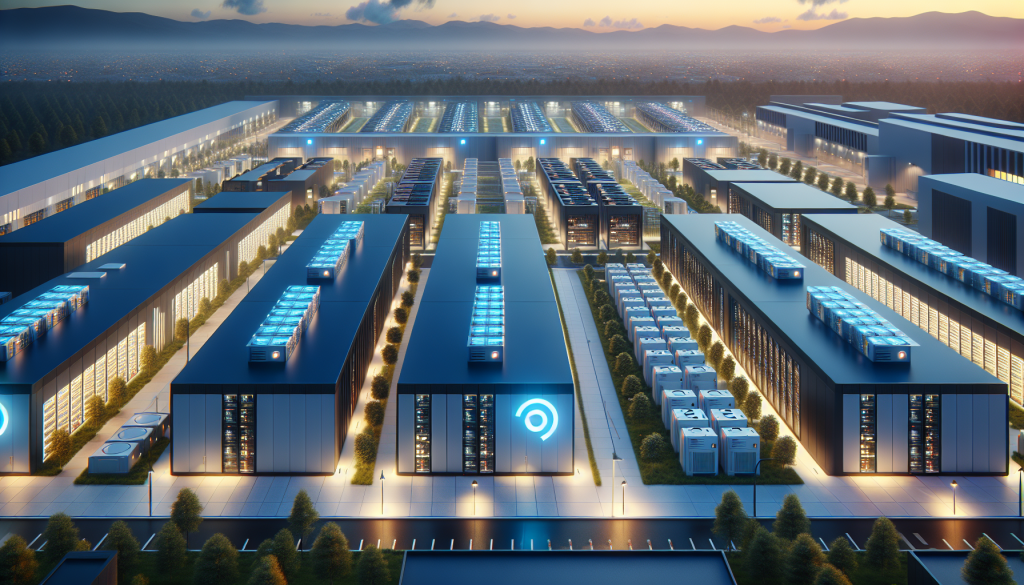
Overview: who is building what and why it matters
OpenAI is expanding its Stargate infrastructure by building five new large AI data centers in partnership with Oracle and SoftBank. The project aims to increase the companys capacity to train and serve larger, more demanding AI models. Oracle brings cloud and compute resources. SoftBank contributes financing, real estate know how, and local operations support. This buildout is intended to help OpenAI support next generation AI workloads and deliver faster responses to users and businesses.
These facts matter for ordinary readers because data centers are the physical backbone behind popular AI services. When companies add capacity, users can see improvements in speed, availability, and the types of applications that are possible. The new Stargate centers are a sign that OpenAI and its partners expect sustained demand for high performance AI from enterprises and consumers.
What is Stargate in plain language
Stargate is the name OpenAI uses for its network of AI data centers and the supporting systems that run model training and inference. Training means teaching a model from large amounts of data. Inference means using a trained model to answer questions or power apps. Building more Stargate centers increases both training capacity and the ability to serve many users at once.
Partnership roles: Oracle and SoftBank explained
The partnership combines strengths from three organizations. Each partner has a clear role, which helps explain why the collaboration matters.
- OpenAI, the AI developer, needs compute and infrastructure to train and host large models.
- Oracle supplies cloud and compute expertise, data center technology, and operational services. Oracle has an established enterprise cloud business and experience running large workloads.
- SoftBank provides financing, local real estate, and operational support. SoftBanks global presence helps with property acquisition and local deployment logistics.
By combining software, compute, and capital, the partners can build data centers more quickly and align capacity with enterprise demand.
Technical implications for model training and serving
Adding five large data centers affects multiple technical areas. Here are the main changes to expect.
- More training capacity. Larger clusters let OpenAI train bigger models or run more experiments at once. That accelerates research and model development.
- Lower inference latency. Placing centers in more regions reduces the distance data travels, which speeds up responses for users and apps.
- Specialized deployments. Extra capacity makes it easier to host models tuned for specific industries, languages, or regulatory regions.
- Redundancy and reliability. Multiple centers improve fault tolerance. Traffic can shift between sites if one location needs maintenance or faces an outage.
How this shifts the competitive landscape
OpenAI has been a leading AI developer and cloud partners remain central to its growth. This buildout strengthens OpenAIs position relative to major cloud providers and AI competitors.
- Against cloud giants. Amazon Web Services, Google Cloud, and Microsoft Azure already host large AI workloads. OpenAI building its own centers with Oracle and SoftBank gives it more control over hardware choices and deployment timing, which can help performance and cost predictability.
- For enterprise customers. Many companies prefer closer integration between model providers and cloud infrastructure. A joint buildout signals OpenAI is preparing to meet enterprise requirements for scale and service levels.
- Market pressure. The move may push competitors to expand capacity and refine pricing for AI compute services.
Business and financial view
Large AI data centers require significant capital and operating budgets. The partnership structure spreads costs and risk.
- Capital intensity. Building several sites involves land, construction, power systems, cooling, and specialized racks and networking equipment. Partnering with Oracle and SoftBank helps share upfront costs.
- Investment horizon. Data center projects typically unfold over multiple years. Expect planning, construction, and phased capacity activation rather than an overnight change.
- Revenue signal. Committing to more infrastructure suggests OpenAI anticipates ongoing enterprise demand for model access and custom deployments that generate revenue.
Regulatory and data governance considerations
Expanding physical infrastructure raises questions about where data is stored and how it moves between jurisdictions. Those issues matter for privacy, compliance, and government oversight.
- Jurisdictional rules. Countries have different privacy laws and data residency requirements. Locating centers in specific regions can help meet local legal obligations.
- Cross border flows. If models or training data move across borders, operators must manage compliance with export controls, privacy regulations, and contractual terms.
- Regulatory scrutiny. As infrastructure grows, regulators may examine concentration of compute, partnerships between global firms, and potential national security implications.
Environmental impact and efficiency options
Large AI data centers consume substantial electricity. That creates both challenges and opportunities for cleaner operations.
- Energy demand. Training state of the art models uses significant compute power and therefore energy. New centers will increase total demand unless offset by efficiency gains.
- Renewable sourcing. Operators can reduce emissions by contracting renewable energy or locating sites near clean power sources.
- Efficiency measures. Techniques include better cooling, newer hardware with improved performance per watt, and workload scheduling to smooth peak demand.
User impact and likely product changes
For everyday users and businesses, the benefits come through faster responses, higher availability, and access to more advanced or specialized models.
- Lower latency. Users in regions near the new centers may see quicker replies in chat, search, or real time features.
- Better availability. More capacity reduces the chance of slowdowns during peak demand.
- New enterprise features. Additional infrastructure supports offerings tailored for business needs, such as on demand training, private deployments, or dedicated model instances.
- Pricing. Increased supply of compute could affect pricing for enterprise customers. For consumer pricing, changes will depend on product strategy and operating costs.
Key Takeaways
- OpenAI, Oracle, and SoftBank will build five new Stargate AI data centers to expand training and serving capacity.
- The partnership combines OpenAIs model development, Oracles cloud technology, and SoftBanks financing and real estate support.
- More centers mean lower latency, more specialized models, and better reliability for users and businesses.
- The move affects competition with major cloud providers and raises questions about regulation and energy use.
FAQ
Q. What is the timeline for these data centers?
A. Large data center projects are typically multi year efforts. Expect phased construction, equipment installation, and gradual activation of capacity.
Q. Will my data be stored in these centers?
A. That depends on where services are provisioned and the agreements customers sign. Enterprises that require regional data residency can often request deployments in specific locations.
Q. Will this make AI cheaper for consumers?
A. Greater infrastructure capacity can lower costs for providers. Whether savings reach consumers depends on product pricing choices and operating costs, such as energy and maintenance.
Q. How will this affect climate goals?
A. Additional compute increases energy demand. Operators can limit emissions by using renewable energy, efficient hardware, and smarter cooling and scheduling. The environmental outcome will depend on those choices.
Final thoughts and what to watch next
The five new Stargate data centers represent a strategic step for OpenAI and its partners. The project strengthens OpenAIs ability to train larger models and serve more users with lower latency. It also highlights how AI growth drives investment across cloud providers, finance partners, and real estate firms.
In the coming months and years, watch for announcements about the locations of the centers, timelines for activation, and the kinds of products or enterprise services enabled by the new capacity. Also follow regulatory activity related to data residency and cross border data movement, and announcements about energy sourcing and efficiency measures.
Conclusion
OpenAI’s collaboration with Oracle and SoftBank to build five new Stargate data centers signals an ongoing shift toward larger, regionally distributed AI infrastructure. For users, the most direct results will likely be faster responses and improved reliability. For businesses and governments, the development raises practical questions about regulation, cost, and environmental impact. As the buildout progresses, those questions will shape how this additional capacity is used and regulated.





 AI Everything Today
Leave a comment