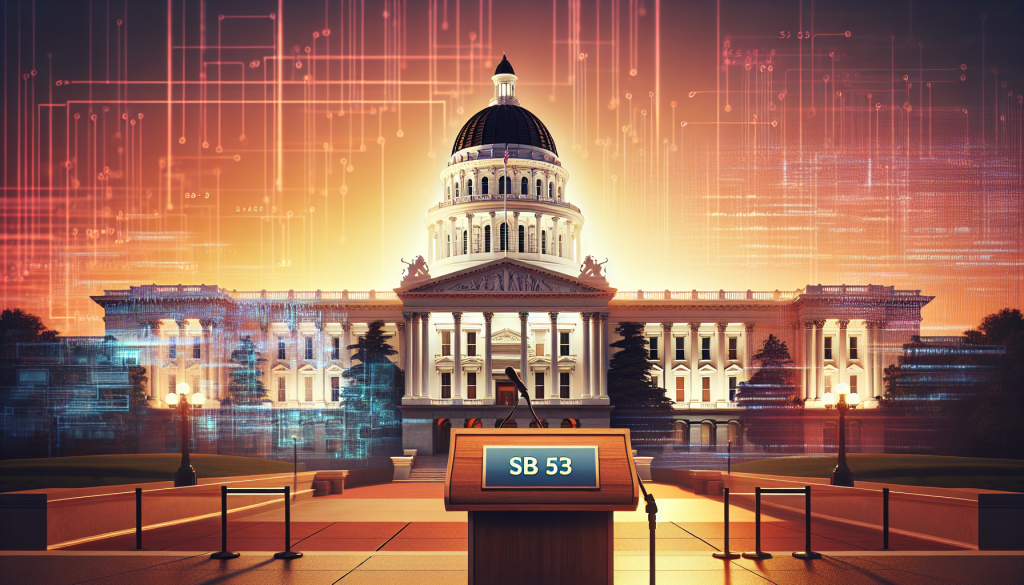
Quick overview: SB 53, California lawmakers, and Gov. Gavin Newsom
California lawmakers have passed SB 53, a state bill aimed at increasing transparency and oversight for large artificial intelligence companies. The measure targets high risk AI systems and adds new disclosure, audit, and reporting requirements for certain firms. Governor Gavin Newsom can still sign the bill into law, or he can veto it; his decision will shape the future of state level AI oversight in the United States.
The bill focuses on large companies and systems judged to present higher public risk. It requires companies to disclose key information about how these systems are developed and used, to conduct audits, and to provide regulators with certain reports. The bill’s passage in the California legislature marks a significant step toward state driven AI regulation.
What SB 53 covers, in plain language
SB 53 applies to companies that meet size or revenue thresholds and to AI systems that the law classifies as high risk. The bill is designed to force more openness about how these systems work and how they are managed. Key parts include:
- Disclosure requirements, such as information about data sources, model capabilities, and safety testing.
- Independent audits for systems evaluated as high risk, to check for safety, bias, and reliability.
- Reporting obligations for incidents, failures, and significant harms linked to covered systems.
- Procedures for regulators to review compliance and request additional information.
- Timelines for when companies must complete audits and file reports after deployment.
Why lawmakers call this a landmark state level policy
State lawmakers framed SB 53 as landmark because it creates enforceable transparency rules at the state level for a technology that is quickly spreading through many parts of daily life. California has a long history of tech and privacy regulation, and state rules often influence national debates. By targeting large AI providers and high risk systems, the bill aims to reduce harm and increase public trust.
How this differs from existing rules
- It sets specific disclosure and audit expectations tied to risk categories.
- It uses state authority to require reporting and oversight, rather than relying solely on voluntary industry practices.
- It creates a model other states could follow if it becomes law.
Why the governor might still veto
Governor Gavin Newsom can sign SB 53, allow it to become law without his signature, or veto it. There are several reasons he might veto, based on political, practical, and industry considerations.
- Industry feedback. Large AI companies and trade groups may argue the bill imposes costly burdens, threatens trade secrets, or conflicts with federal law. Their lobbying could influence the governor.
- Enforcement and cost concerns. State budget officials and regulators may flag enforcement costs, staffing needs, and unclear timelines for audits and reviews.
- Political calculations. Newsom could weigh the bill against broader economic goals, relations with Silicon Valley firms, and the desire for a coordinated federal approach.
Practical implications for large AI companies
If SB 53 becomes law, large AI firms will face new obligations that affect operations, budgets, and legal exposure. Here are the main practical impacts.
- Documentation and disclosures. Companies will need better records about training data, model design choices, and internal safety tests.
- Independent audits. High risk systems will require third party audits covering performance, fairness, and safety.
- Incident reporting. Firms will have to report certain failures and harms to state regulators within specified timeframes.
- Compliance costs. Legal, operational, and audit costs could rise, especially for large models and systems deployed at scale.
- Risk of penalties. Noncompliance may trigger fines or other enforcement steps, depending on the bill’s penalty structure.
Enforcement, penalties, and timelines
SB 53 includes provisions that define how the state can enforce the rules, what penalties may apply, and when companies must act. The bill sets deadlines for initial disclosures and audit completion, and it gives regulators authority to request more information. Penalties are meant to encourage compliance rather than punish first time lapses, but they could include fines or administrative actions for repeated violations.
Regulatory timelines in the bill aim to balance rapid oversight with the reality of complex technical reviews. Audits typically require time to select firms, scope reviews, and analyze results, and the bill outlines staged deadlines to account for these steps.
How SB 53 compares with federal efforts and the EU AI Act
SB 53 sits among multiple approaches to AI regulation. At the federal level, agencies and Congress are discussing principles and potential rules but a single federal law has not yet been enacted. The EU AI Act is currently the most advanced regional law and it uses a risk based approach to regulate AI across member countries.
Key differences include:
- Scope. The EU law applies broadly across sectors in multiple countries, while SB 53 focuses on California and on larger companies and higher risk systems.
- Enforcement. The EU has clear centralized enforcement mechanisms; SB 53 relies on state regulators and budgets.
- Fragmentation risk. If individual states adopt differing rules, companies could face a patchwork of requirements in the U.S. that complicate compliance.
Industry response and likely lobbying steps
Large technology companies, AI firms, and industry trade groups often respond to new regulation with a mix of public comment, legal analysis, and private lobbying. Expect efforts to:
- Ask for narrower definitions of what counts as a high risk system.
- Seek longer implementation timelines for audits and reporting.
- Request clearer protections for trade secrets and intellectual property when disclosures are required.
- Push for federal preemption, to avoid a patchwork of state rules.
Impacts on startups, researchers, and everyday users
The bill will not affect everyone equally. Startups may face both challenges and possible advantages, researchers will need to adapt, and consumers could see changes in how AI is used in services.
- Startups. Smaller firms may be exempt if they fall under size thresholds, but those that scale quickly could face new compliance costs. On the positive side, transparent requirements could level the playing field by creating clearer safety expectations.
- Researchers. Academic and independent researchers may have more constrained access to some company systems if firms tighten controls to protect trade secrets. At the same time, audits and disclosures could provide more public information about how systems behave.
- Consumers. Increased transparency could reduce harms from biased or unsafe systems, but compliance costs might slow feature rollouts or increase service costs in some cases.
Next steps and timelines to watch
The immediate next step is the governor’s decision. Newsom typically has a window of time to sign bills, veto them, or allow them to become law without a signature. Observers will watch for his public statements and consultations with regulators and industry leaders. If Newsom vetoes the bill, lawmakers could attempt revisions or pursue other paths to similar goals.
Look for these milestones in the coming weeks:
- Governor’s decision on whether to sign or veto SB 53.
- Follow up guidance from state agencies if the bill becomes law, detailing reporting forms and audit standards.
- Industry responses and potential legal challenges once the law is in effect.
Key takeaways
- SB 53 is a state law proposal that would require large AI companies to disclose information, conduct audits, and report incidents for high risk systems.
- Governor Gavin Newsom can still veto the bill; his choice will depend on industry feedback, enforcement concerns, and political considerations.
- If enacted, the bill creates new compliance costs and oversight for large firms, and it could influence national debate over AI regulation.
- The bill sits alongside federal actions and the EU AI Act, creating a possible patchwork of rules in the U.S.
FAQ
Who does SB 53 apply to?
The bill targets large companies that meet defined thresholds and the AI systems the law classifies as high risk. Small firms below those thresholds may not be covered.
What information would companies have to disclose?
Disclosures include details about training data sources, model capabilities and limits, safety tests, and risk assessments, subject to any protections for trade secrets that the bill allows.
When will we know if SB 53 becomes law?
The governor has a set period after legislative passage to sign or veto the bill. Watch for an official announcement in the weeks following the legislature’s vote.
Conclusion
SB 53 represents a major effort by California lawmakers to set guardrails for powerful AI systems. It would increase transparency, require audits, and create new reporting duties for large companies, particularly for systems deemed high risk. Governor Gavin Newsom’s pending decision will determine whether the bill takes effect at the state level. The outcome matters beyond California, because the state’s rules could influence national policy, corporate practices, and how people experience AI in everyday services.





 AI Everything Today
Leave a comment