
The pace of artificial intelligence is moving faster than ever. Major players like OpenAI, Google DeepMind, Microsoft, Anthropic, Meta, Amazon, and NVIDIA are racing to develop smarter, more capable AI systems. Executives across these companies are offering bold predictions for what 2025 and 2026 will bring.
In this post, I will break down their latest thinking, based on public statements from company blogs, leadership interviews, and news in 2025. I’ll cover how fast AI is advancing, what’s expected next, how AI is affecting human labor, where we are with AI in cars and robots, and the biggest opportunities and concerns.
AI Is Advancing Faster Than Expected
All major AI leaders agree: AI progress is accelerating rapidly. The cost to run powerful models has been dropping by a factor of ten or more each year. This has led to broader access and faster innovation.
Sam Altman, CEO of OpenAI, described this as “unbelievable.” His company expects AI agents to begin acting like junior employees by the end of 2025. Google’s DeepMind team, led by Demis Hassabis, thinks we may reach human-level AI within 5 to 10 years.
Anthropic’s CEO, Dario Amodei, goes even further. He predicts artificial general intelligence (AGI) could emerge as soon as 2026. Microsoft CEO Satya Nadella believes AI’s impact will be so large that global GDP growth could hit 10% if AI reaches its potential.
What to Expect in 2025 and 2026
OpenAI: Virtual AI Co-workers
OpenAI expects AI agents to function as virtual co-workers in the next year. They will handle many routine tasks under human supervision, boosting productivity across industries. Altman predicts that by 2026, AI agents will move beyond assistance to discovering new knowledge.
Google DeepMind: Multi-modal AI Everywhere
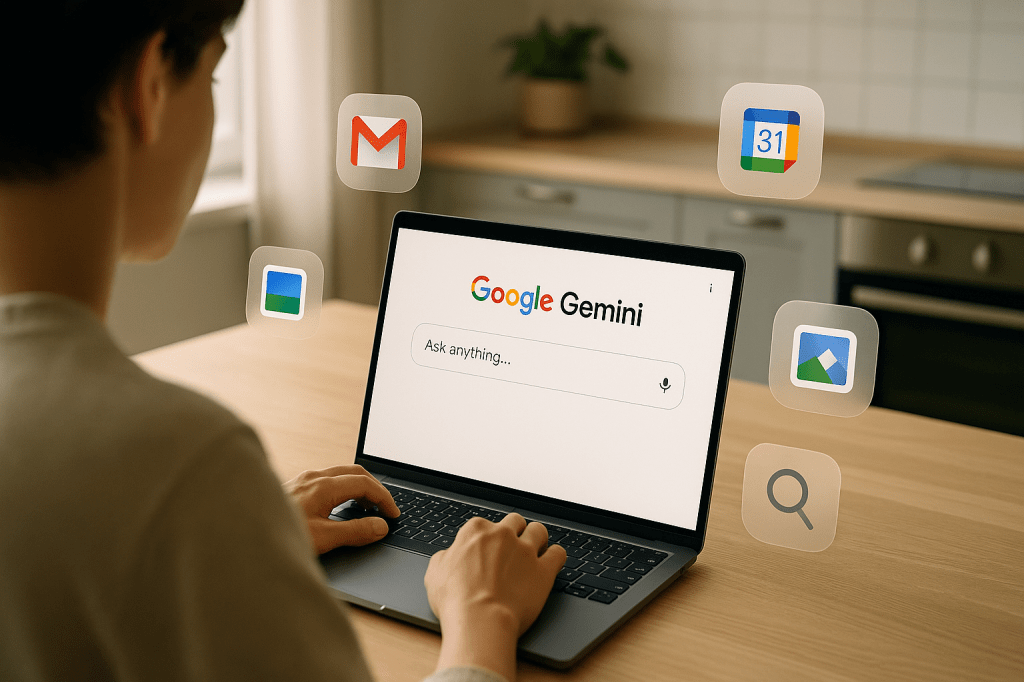
Google is pushing its Gemini multi-modal AI to power everything from search to productivity apps. CEO Sundar Pichai calls 2025 a defining year. DeepMind’s Demis Hassabis expects AI will help solve scientific challenges like curing diseases and producing clean energy.
Anthropic: AI-Powered Billion-Dollar Companies
Anthropic’s Dario Amodei sees AI enabling one or two-person companies to reach billion-dollar valuations. He also believes AI will soon act as a principal investigator in scientific research, helping accelerate breakthroughs in biology, medicine, and energy.
Microsoft: AI Copilots Everywhere
Microsoft is embedding AI copilots across its software products. Nadella wants AI agents to handle repetitive tasks so humans can focus on creative and strategic work. The company is preparing for an “agent-first” future where AI can execute user goals across multiple apps.
Is AI Ready to Replace Human Labor?
In the near term, most companies expect AI to augment rather than replace human workers. AI will handle repetitive, low-level tasks, freeing humans for higher-value work.
OpenAI reports that some tech firms have reduced junior hires by 25% after adopting AI tools. Anthropic warns that half of entry-level white-collar jobs could disappear in 1 to 5 years if no action is taken.
Microsoft’s leaders emphasize that they will continue hiring engineers but will value creativity and judgment more than rote coding. Google and Meta share this view, seeing AI as an amplifier of human productivity.
What’s the Next Big Thing in AI?
AI Agents
The next wave of AI innovation will center on intelligent agents that can plan, execute, and learn. Companies like Microsoft, Google, OpenAI, and Anthropic are all developing agents that can handle multi-step tasks autonomously.
For example, Microsoft envisions users delegating goals to agents, who will then coordinate across multiple services. Anthropic is building agents that can act as scientific collaborators. OpenAI expects agents to evolve into creative partners capable of solving complex problems.
AI in Everyday Products
AI will become deeply integrated into everyday products. Google is infusing Gemini into search, Gmail, and more. Microsoft is embedding Copilots in Office, Windows, and Azure. Meta is adding AI assistants and content creation tools to its social platforms.
The Biggest Concerns
Job Displacement
AI will disrupt labor markets. Leaders like Dario Amodei warn of large job losses in entry-level roles. While many executives frame AI as a productivity booster, there is a clear risk of widening inequality.
Retraining and education will be critical. Microsoft and Amazon are investing in workforce upskilling. Google and Meta stress the need for responsible AI deployment.
Misinformation and Safety
AI’s ability to generate realistic fake content is a major concern. Deepfakes and AI-generated misinformation could undermine trust. Companies are developing watermarking and authenticity tools to combat this.
There is also fear of malicious use of AI, from cyberattacks to bioengineering risks. Governments and companies are beginning to collaborate on AI safety standards and testing requirements.
Losing Control of Superintelligent AI
Some leaders, like Altman and Hassabis, worry about the long-term risk of losing control of superintelligent AI. Research on AI alignment and governance is a top priority to ensure future AI systems remain safe and beneficial.
The Biggest Opportunities
Accelerating Scientific Discovery
AI is poised to revolutionize science. It can analyze vast datasets, design experiments, and generate insights faster than human researchers. Leaders expect breakthroughs in healthcare, energy, and materials science.
Economic Growth and New Business Models
AI could drive a new wave of economic growth. Small teams and solo entrepreneurs can leverage AI to build products and businesses that were previously out of reach. Entirely new industries may emerge around AI agents and personalized services.
Education and Accessibility
AI tutors could transform education, providing personalized instruction to anyone, anywhere. This has the potential to democratize learning and close opportunity gaps.
Enhancing Human Creativity
Generative AI tools empower creators to bring their ideas to life. From art and music to writing and film, AI will lower the barriers to creative expression.
Final Thoughts
2025 will be a pivotal year for AI. The technology is advancing at a blistering pace, and its impact will be felt across every industry and aspect of life. The next big thing will be intelligent AI agents that can plan and act autonomously.
While the opportunities are immense, the challenges are just as real. Navigating job transitions, ensuring AI safety, and building trust will be critical. If managed wisely, AI could usher in a new era of innovation and prosperity.
As Sundar Pichai put it, “We have to get this right, because the stakes for society are huge.” And as Sam Altman said, “In a decade, perhaps everyone on Earth will be capable of accomplishing more than the most impactful person can today.”


 AI Everything Today
Leave a comment