
Generative AI is one of the most exciting areas of artificial intelligence today. It helps us create new text, images, videos, and more with just a few words. But as tools and models grow, the ecosystem becomes harder to understand. Terms like LLMs, diffusion models, and agentic AI can be confusing.
In this post, we’ll break it all down. We’ll show how the pieces fit together and explain the key categories. Whether you’re new to AI or already using tools like ChatGPT or MidJourney, this guide will help you understand the bigger picture.
What Is Generative AI?
Generative AI refers to AI models that can create new content. This could be writing a story, generating a picture, composing music, or producing a video. The key idea is that the AI isn’t just reacting or classifying, it’s generating something new.
There are many types of generative AI, and they can be grouped into two main areas:
- LLMs (Large Language Models): Focused on text and code
- Media Models: Focused on image, video, and audio
Let’s look at each of these more closely.
LLM (Large Language Models)
LLMs are the most well-known type of generative AI today. These are models trained on massive amounts of text data. They can write, summarize, translate, answer questions, or even write code.
Examples of LLMs:
- GPT-4 / GPT-4o by OpenAI
- Claude 3 by Anthropic
- Gemini 1.5 by Google
- LLaMA 3 by Meta
- Mistral and Command R by smaller AI companies
These models don’t have a user interface on their own. They live behind the scenes, inside products and platforms.
LLM Interfaces
To use LLMs easily, companies build user-friendly tools that connect to them. These are what we usually interact with when we “talk to an AI.”
Popular LLM interfaces:
- ChatGPT (by OpenAI)
- Claude (by Anthropic)
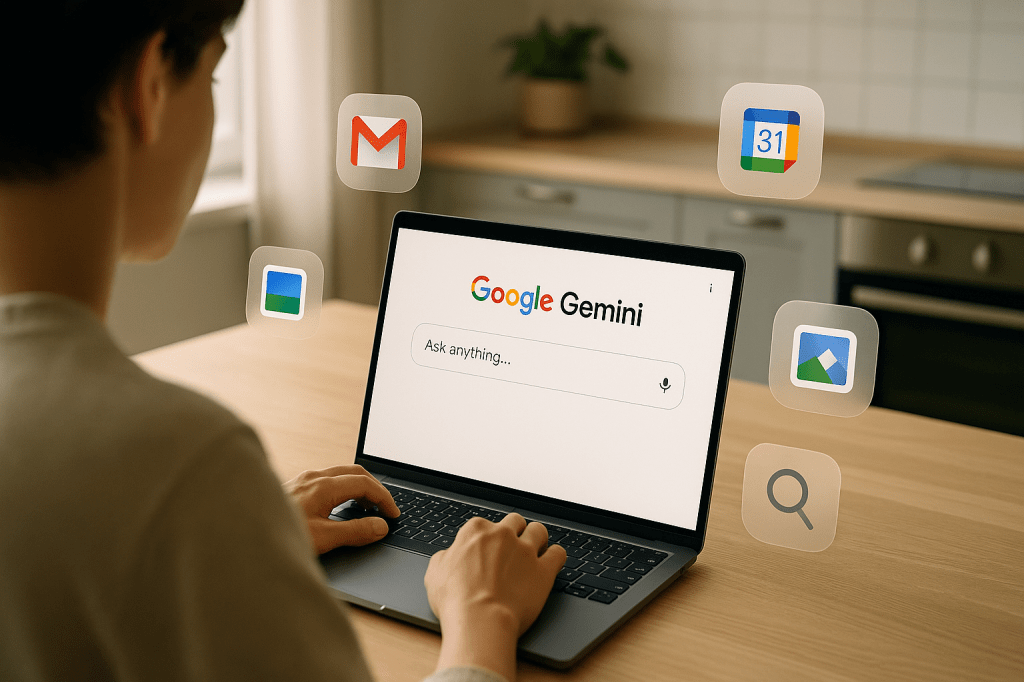
- Gemini (by Google)
These tools allow you to enter a question or request and get a smart answer. But behind the scenes, the real work is done by the LLM.
Media Generative AI
While LLMs focus on text, media generative AI focuses on visual or audio content. These models turn written prompts into images, videos, or sound.
They are not LLMs. Instead, they are often based on diffusion models or transformers for vision/audio.
Subcategories of media generative AI:
- Image generation: MidJourney, DALL·E, Stable Diffusion
- Video generation: Sora (OpenAI), Veo (Google), Runway
- Audio generation: ElevenLabs, OpenAI Voice, TTS tools
These tools also need interfaces. For example, MidJourney runs on Discord, while Runway is a web-based platform.
Generative AI Interfaces for Media
Just like ChatGPT helps you use an LLM, tools like MidJourney or Runway help you use media models. These platforms allow you to enter a text prompt and get back an image or video.
Examples:
- MidJourney (Discord bot)
- Runway (Web platform)
- Pika, Kaiber, Sora (for video)
So when we say “MidJourney is a generative AI,” we’re really talking about both the model (like MidJourney v5) and the interface (on Discord).
Generative AI-Based Applications
Some tools are built on top of these LLMs or media models. They don’t create new models but use existing ones to solve specific problems.
These are called generative AI-based applications.
Examples:
- Cursor: A code editor that uses GPT-4 and Claude to help write code
- Notion AI: Adds writing and summarizing features to Notion
- Jasper: Helps marketers write copy using AI
- Canva Magic: Generates designs, images, and text within Canva
These tools feel different from ChatGPT or MidJourney because they’re focused on specific workflows.
What Is Agentic AI?
Agentic AI is a special kind of generative AI-based application. It doesn’t just generate one thing and stop. Instead, it can plan, take actions, use tools, and adjust based on results. Think of it as an AI assistant that can solve multi-step tasks on its own.
Core features of agentic AI:
- Goal setting
- Task planning
- Tool usage (like calling APIs or clicking buttons)
- Feedback loops and retries
Examples:
- Manus AI: Business assistant that automates workflows
- Flowith: Controls your browser to complete tasks
- AutoGPT, Devin, Cognosys: Early-stage agents that can act like humans
These tools are still developing, but the future of generative AI may depend heavily on these “thinking + acting” systems.
How All These Pieces Fit Together
To make it all clear, here’s a simple structure:
- Generative AI (umbrella term)
- LLMs
- Interfaces: ChatGPT, Claude, Gemini
- Apps: Cursor, Notion AI, Jasper
- Media Generative AI
- Interfaces: MidJourney (Discord), Runway (Web)
- Apps: Canva Magic, Adobe Firefly
- Agentic AI
- Sits inside generative AI-based apps
- Adds planning and autonomous behavior
Final Thoughts
The generative AI space is growing fast. Knowing how each piece fits can help you choose the right tools or build smarter solutions.
To recap:
- LLMs generate text.
- Media models generate visuals or sound.
- Interfaces help us interact with these models.
- Applications apply them to real problems.
- Agentic AI adds intelligence and autonomy to the mix.
Whether you’re writing code, generating a video, or building your own AI app, understanding this ecosystem will help you move faster and make better choices.

 AI Everything Today
Leave a comment