Google Search has been our go-to for finding things online for decades. We type a few words, hit enter, and get a list of links. Simple, right? Well, that simple process is undergoing its biggest change yet. Google is rolling out something called “AI Mode” in Search. This isn’t just another small update; it’s a fundamental shift powered by advanced Artificial Intelligence (AI).
Think of it this way: traditional Google Search was like a librarian who gives you a list of books that might have the answer. AI Mode is like an expert researcher who reads the books, understands your question deeply, and gives you a summarized answer, complete with references, while also being ready to discuss follow-up questions.
This new AI Mode is built on Google’s cutting-edge AI models, specifically a powerful version of Gemini 2.5. Its goal is to move search beyond just finding information. It wants to understand your needs, provide intelligent responses, and even help you get things done.
What Exactly is Google AI Mode? It’s Search Reimagined.
Google’s AI Mode is designed to be your most advanced AI search experience. It steps away from the familiar list of ten blue links for many complex queries and instead provides a rich, AI-generated overview or response right at the top. It’s available as a distinct experience, initially rolling out in the U.S.
Here’s what makes it different:
- It Understands You Better: You don’t need to use awkward search terms anymore. AI Mode understands natural language, complex questions with multiple parts, and nuances. You can ask things like, “What are the best places to visit in Europe in June that are not too crowded and have good hiking trails?” and it can process that multi-faceted request.
- Deep, Intelligent Reasoning: AI Mode uses a clever technique called “query fan-out.” When you ask a complex question, it doesn’t just do one search. It breaks your question down into smaller parts and issues many searches simultaneously across different topics. Then, it brings all that information together, analyzes it, and synthesizes a comprehensive answer. This helps it surface deep, hyper-relevant content from across the web that you might never have found with traditional search.
- It’s Conversational: AI Mode isn’t a dead end. You get an initial response, but you can then ask follow-up questions. This creates a dynamic, interactive dialogue. If you ask about hiking trails, you can then ask, “Are any of those dog-friendly?” or “What gear would I need?”. The AI remembers the context of your conversation.
- Deep Dive Research: A feature within AI Mode called “Deep Search” takes this even further. For really complex research topics, it can issue hundreds of queries and synthesize detailed, expert-level reports in minutes. These reports are fully cited, meaning you can see exactly where the information came from. This could save hours of manual digging for students, researchers, or anyone needing thorough information.
- It’s Multimodal: Search isn’t just text anymore. AI Mode is designed to handle queries that combine text with images. You could, for instance, upload a photo of a plant and ask, “What is this plant, and how do I care for it?”. Future capabilities, leveraging technology like Project Astra, will allow for “Search Live” where you can use your camera in real-time to ask questions about your physical environment. Imagine pointing your camera at a tricky appliance and asking, “How do I turn this on?”.
- It Can Perform Tasks (Agentic Capabilities): This is a big leap. AI Mode, using features from ‘Project Mariner’, is starting to act like a digital assistant that can complete tasks. It can help you book event tickets, make restaurant reservations, or book appointments by analyzing options, comparing details, and even assisting with filling out forms. It’s partnering with sites like Ticketmaster and Resy to start.
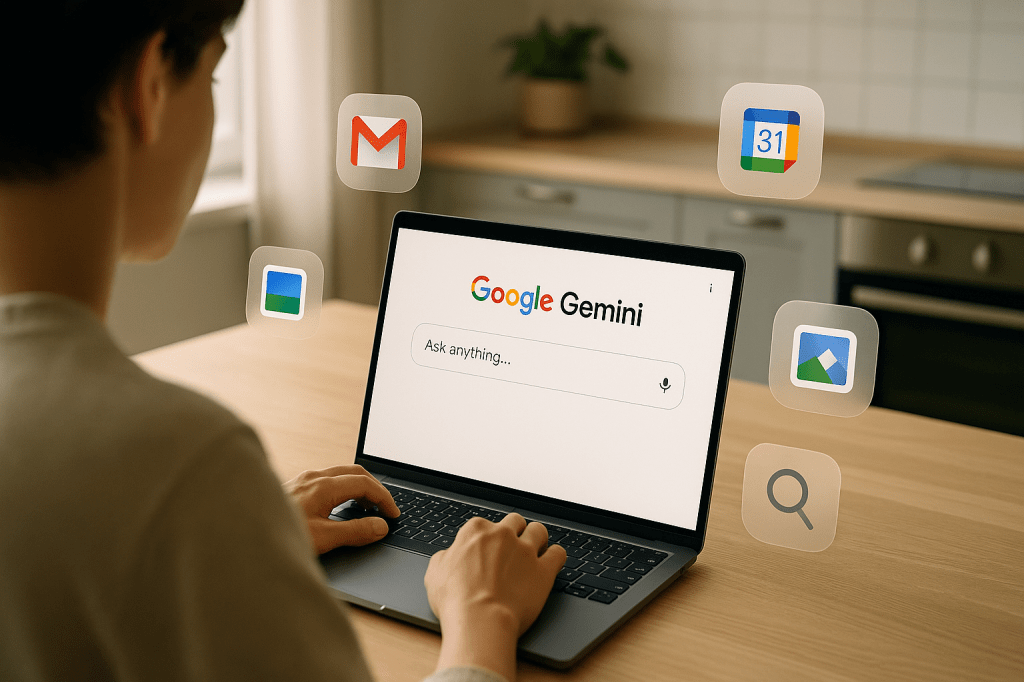
- It Gets Personal (With Your Permission): Soon, AI Mode will offer tailored suggestions based on your personal context. If you opt-in, it could look at things like your past searches or even information from other Google apps like Gmail (e.g., travel bookings) to give you more relevant results. Privacy is a key focus here, with clear opt-in controls and indicators when personal context is used.
- Data Visualization: For data-rich queries, AI Mode can generate custom charts and graphs. If you’re looking at sports statistics or financial data, it can visualize trends for you directly in the search results.
- Enhanced Shopping: AI Mode integrates with Google’s Shopping Graph. It can help you browse products, compare features, potentially even let you do virtual try-ons using an uploaded image, and assist with the actual purchase process, including monitoring prices.
How AI Mode Changes the Way We Get Information
This isn’t just Google being flashier. AI Mode fundamentally changes the user experience and our relationship with online information.
- Moving from Links to Answers: Instead of just getting a list of potential sources, AI Mode aims to provide you with the answer directly. This makes finding information much faster for many types of queries.
- Deeper Exploration: Even though you get a summarized answer, AI Mode encourages deeper dives. It provides clear links to the source websites used to generate the response. Users are showing higher engagement with these links and spending more time on source sites because the AI-generated context makes the links more relevant and useful².
- More Natural Interaction: The conversational interface means search feels more like talking to someone knowledgeable than typing commands into a box. This can make search much more accessible and intuitive for everyone.
- Multimodal Input Opens New Doors: Being able to search using images or potentially live camera feeds expands the possibilities for how we get help and information in real-time situations.
- Increased Search Usage: Google reports that features like AI Overviews (a related AI feature) have already led to a more than 10% increase in usage for certain types of queries in major markets². Users find the AI capabilities helpful and are using search more often for complex needs.
What This Means for Website Owners, Content Creators, and SEO
If you have a website or create content online, Google’s AI Mode has significant implications. While some people worried this meant the end of SEO and website traffic, the reality is more nuanced. Content quality remains absolutely critical.
Google’s official guidance is clear: unique, helpful, people-first content is still the foundation for success, both in traditional “blue link” search and in AI Mode. If your content is valuable and trustworthy, it has a high chance of being surfaced and cited by AI Mode.
Here’s a breakdown of the key SEO considerations:
- Content Quality is King (Still): This cannot be stressed enough. AI Mode needs high-quality information to synthesize. If your content is well-researched, accurate, original, and genuinely answers user questions comprehensively, it’s more likely to be included in AI-generated responses or linked as a primary source. Focus on satisfying complex informational needs and providing unique insights.
- Technical SEO Matters More Than Ever: AI needs to understand your content perfectly.
- Crawling and Indexing: Ensure Google can easily find and understand all pages on your site. Basic technical SEO practices are non-negotiable.
- Structured Data: This is crucial. Using schema markup helps Google (and its AI) understand exactly what information is on your page – whether it’s a product, a recipe, an event, or FAQs. Accurate structured data makes your content more eligible for inclusion in AI responses and rich results.
- Preview Controls: Google provides tools like nosnippet, max-snippet, and noindex. Publishers have control over how their content is displayed (or not displayed) in AI Overviews and summaries. Understand and use these controls if you have specific needs regarding how your content appears.
- Page Experience is Important: How fast and easy is your website to use? Seamless, responsive design with clear main content is important for user engagement, which Google factors in. It also affects how easily Google’s systems can process your content.
- Embrace Multimodal Content: As users search with images and expect rich media answers, supporting various content formats becomes key.
- Optimize Images: Use descriptive alt text and captions. Ensure images are relevant to your content.
- Video: Create high-quality videos that complement your written content.
- Product Data: If you sell products, ensure your product feeds and pages have rich, detailed information and high-quality images.
- Traffic Quality Over Quantity: Some industry experts worry that direct AI answers might reduce traditional website clicks for certain types of queries. However, Google suggests that clicks from AI-enhanced results are often more valuable because the user is already better informed and more likely to engage deeply with the source content. SEO strategies should increasingly focus on measuring conversions, time on site, and other metrics of engagement quality rather than just raw click numbers.
- Adaptation is Continuous: AI Mode is evolving rapidly. New features are being tested and rolled out constantly. SEO professionals and content creators must stay informed about these changes and be prepared to adapt their strategies. Google’s own guidance is likely to evolve as AI Mode matures.
Rollout Status and Recent News
As of May 2025, Google’s AI Mode is rolling out more widely in the U.S. It moved from being just in Google Search Labs (an experimental program) to becoming a more integrated option for users, appearing as a new tab in Search and the Google app. It’s powered by the custom version of Gemini 2.5.
Google announced several exciting new features at Google I/O in May 2025 that will roll out initially in Labs in the coming months. These include the full Deep Search capability, the live camera-based “Search Live,” enhanced agentic task completion, deeper personalization options, custom charts, and the advanced AI shopping partner features.
However, it’s important to note that AI is still a developing technology. While Google highlights increased usage and user satisfaction with AI Overviews, early independent testing by sources like The New York Times found that AI Mode could still produce inaccuracies on some basic local search queries in late May 2025. This led to advice for users to “proceed with caution” in some cases. Google acknowledges that AI products are still in their early stages and is continuously working to improve accuracy and address potential issues like factual errors or unintentional bias.
This highlights that while the technology is powerful and rapidly advancing, it’s not perfect yet. Google is using rigorous quality systems and testing extensively, and if the system isn’t confident in the accuracy of an AI-generated summary, it will revert to showing traditional search results.
Looking Ahead: A Smarter, More Interactive Future
Google’s AI Mode is a clear signal of the future of search. It’s moving away from being just a directory of the web and becoming a powerful AI-powered research assistant, task completer, and learning partner.
For users, this promises a much more intuitive, efficient, and personalized way to access the world’s information and get things done online.
For content creators and website owners, it means a necessary evolution in strategy. The core value of creating high-quality, trustworthy, and comprehensive content remains, but how that content is discovered and consumed is changing. Success will come from focusing on creating genuinely valuable information, ensuring it’s technically accessible and well-structured for AI understanding, and adapting to the evolving ways users interact with search results.
The rollout of AI Mode isn’t just a new feature; it’s the dawn of a new era in how we search. Staying informed and adapting will be key for everyone navigating the increasingly intelligent digital landscape.




 AI Everything Today
Leave a comment